Friday, February 14, 2014

The First Lady of the Civil Rights Movement

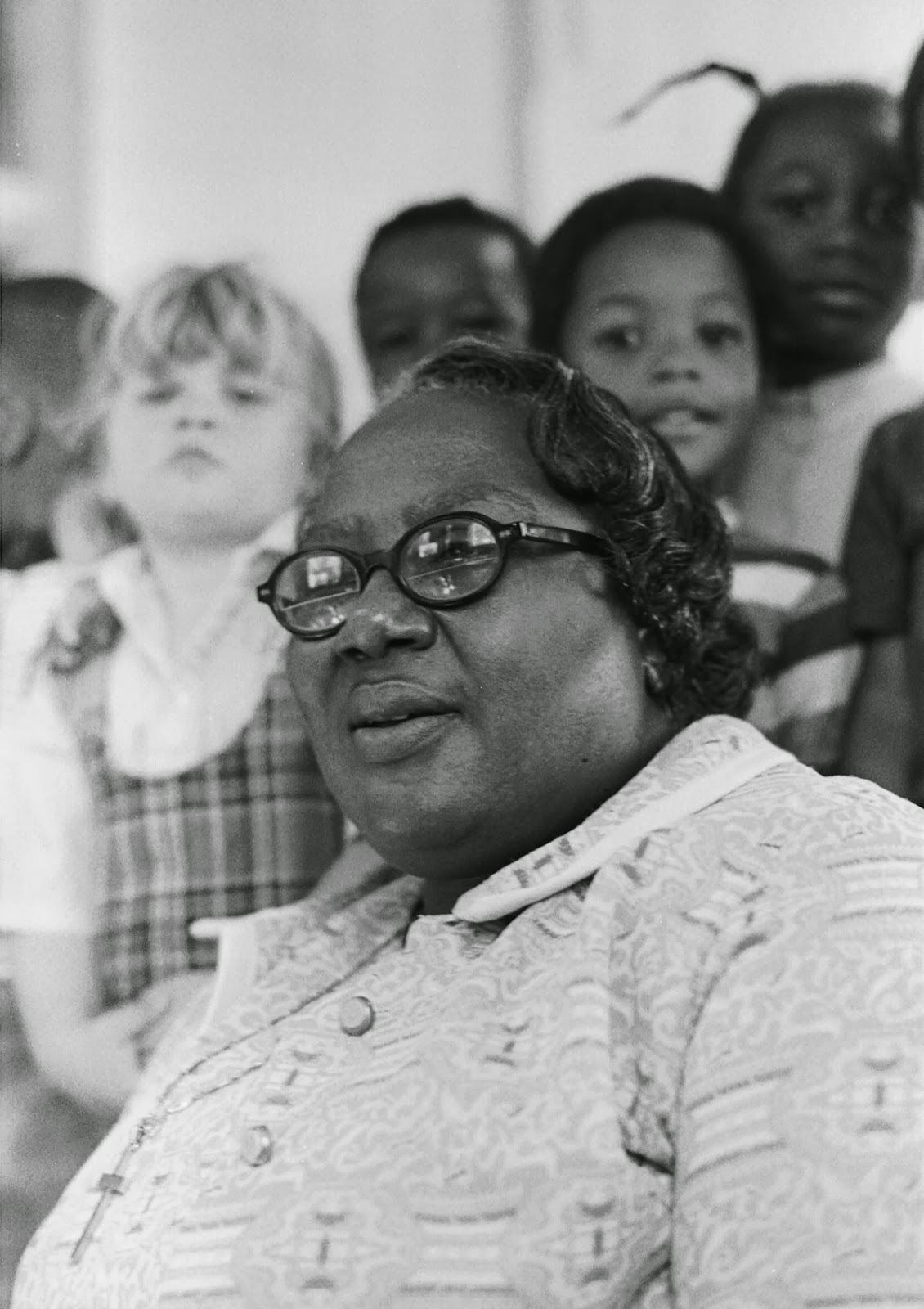
Coretta Scott was born in Heiberger, Alabama and raised on her parent’s farm in Perry County, Alabama. She was no stranger to the injustices of the era, even from a very young age. She saw her father’s lumber mill burned down by white neighbors, and had to walk five miles a day to reach the one room Crossroad School in Marion though there was a closer more well funded all white school. However, Coretta was tenacious and sought to excel in everything she did. She was the valedictorian of her class and received a scholarship to Antioch College in Ohio. It was here that she began to take an active interest in social justice and the civil rights movement. She joined the Antioch chapter of the NAACP, and Antioch’s Race Relations and Civil Liberties Committee. After she graduated with her BA in music and education, she received a scholarship to study concert singing at the New England Conservatory in Boston. It was there she met Martin Luther King Jr.

After they were married in 1954, Martin received an opportunity to serve as Pastor for the Dexter Avenue Baptist Church in Montgomery, Alabama. Coretta was initially reluctant to go back to the South because of the racial injustice and violence that she had faced there, but she agreed with Dr King that it was because of this injustice that they were being called back. The Kings stay in Montgomery, Alabama was not without incident, as Dr. King was stabbed, their home shot at and bombed, and there were times that their families urged them to leave, but they were steadfast in their beliefs.

Mrs. King took an active part in the Civil Rights Movement. She participated in many of her husband’s campaigns, as well as her own independent efforts towards racial justice and equality. She took part in the Montgomery Bus Boycott of 1955 and journeyed to Ghana to mark the nation’s independence from British rule in 1957. She also traveled to India on pilgrimage to honor the memory of Mahatma Gandhi, whose non-violence work had inspired the Kings efforts to pass the 1964 Civil Rights act.

She also created and performed in Freedom concerts, became the first woman to deliver the Class Day address at Harvard, and was the first woman to preach at a statutory service at St. Paul’s Cathedral. She also became a liaison to the International Peace and Justice organization before her husband had taken a public stand against the Vietnam War.

After her husband’s assassination in 1968, she continued to be a staunch advocate for the rights of minority groups.  King established the Martin Luther King, Jr. Center for Nonviolent Social Change in Atlanta and served as the Center’s President and CEO until 1996. She fought against corrupt governments, struggled to establish her husband’s birthday as a national holiday, stood up against apartheid, and was a major protestor against the Vietnam War and the missile attack on Iraq in 1993. She also believed that "Homophobia [was] like racism and anti-Semitism and other forms of bigotry in that it sought to dehumanize a large group of people, to deny their humanity, their dignity and personhood" and spoke out in support of LGBT rights, actively denouncing DOMA, and speaking at various conferences and rallies for LGBT rights.

King also received several honors and tributes. She received honorary degrees from Princeton, Duke and Bates universities. The American Library Association created a medal in her name to honor outstanding African-American writers and illustrators of children’s literature. Women’s Way awarded her their first Lucretia Mott award in 1978 for her work in the advancement of women and justice. She continued to receive honors even after her death. She had a forest named in her honor in the Galilee region by the Jewish National Fund, was awarded the Gandhi Peace Prize by the government of India, had a school opened in her name to promote young women’s leadership, and had Super Bowl XL dedicated in her honor along with Rosa Parks. Lastly, she had two Congressional resolutions introduced upon her death in the Senate and the House of the United States.

Coretta Scott King was a powerhouse advocate for the rights of others. While her husband is the most famous figure of the era, she is truly the first lady of the Civil Rights Movement in her own right.

Wednesday, February 12, 2014

Girls Experience Twice as Many Interpersonal Stressors

For years, experts have known that by mid-puberty significantly more girls experience depression than boys.  Research out of the University of South Carolina recently confirmed that girls experience twice as many interpersonal stressors as do boys and they are 30% more likely to react with depression –which inhibits their ability to succeed in school or anywhere else. 

During a recent staff meeting the program staff told me of their experience with a girl named, Allie.  Allie was the older sister of one of our summer camp participants.  Her grandmother wanted to register both girls for camp but was afraid she would never get Allie to attend.  She said “Allie had issues with being around girls. “
Allie, a 16 year old high school sophomore had been dealing with bullying from numerous girls.  She didn't fit the mold for cool, she wasn't the right shape or size. 

Of course she was terrified to come to a camp full of girls. She would rather stay at home, alone than join. 

One day Allie came with her grandmother to drop off her sister.  Our program manager, Karen pulled her aside to talk to her and find out why she didn't want to come to Girls Empowerment Camp.  Allie was shy and didn't really respond. So Karen invited her to go on a whale watching trip –no pressure to come every day -just one trip.  Karen did however, bet her that she would want to come back.   

With the right encouragement, Allie found the courage to go on the trip with 35 girls she didn’t know.  The whale watching trip was a transformational experience for Allie. Everyone knew it wasn't about the whales.

Allie began to open up and risk interacting with the other girls and staff.  Her grandmother thanked the staff repeatedly for getting Allie to confront her fear and for showing her that not all girls were going to be ‘mean girls’. 

I hear Allie is coming back this summer 

Our programs are designed for girls.  We build the tools for healthy relationships and talk about the signs of abusive relationships.  We talk about sex and peer pressure.  We teach conflict resolution and dealing with stress.  We build confidence by supplementing their academics with new experiences in Science and Technology -all in a safe and nurturing environment. 

But we still have some work to do. 

Sharalyn Hamilton
Executive Director


Monday, February 10, 2014

Just For Girls: Stories of Success


Rachel Thomas
My high school experience at John Muir High School would not have been the same without the YWCA’s Just For Girls program. The good food and interesting discussions were enough to get me in the door every week. What I loved most about the group was the people — the new friends I met and the kindhearted leaders who quickly became my role models. I was lucky enough to be a part of the Just For Girls pilot program at Muir High School in 1999. When the leaders saw my talent for recruiting more members, I was lucky enough to get hired! I remember feeling so honored. Even though I only worked five hours a week, their faith in me inspired me to believe in myself. It was this kind of leadership that touched me and so many other girls in the Just For Girls program. Cheers to 15 years of inspiration!

Today, Rachel is an educational speaker on the topics of Media Influence and Sex Trafficking Prevention.  To find out more http://www.sowerseducationgroup.com/


Tuesday, February 4, 2014

Race For Equality


The Race is On!


During the month of February, we are RACING to see that girls have an equal chance to succeed regardless of their socio-economic conditions, race, ethnicity or family dynamics. Join us in the Race For Equality and help us reach our goal! 


The YWCA needs your support. Funding through the Pasadena Unified School District's LEARNs program was cut. We needed to sign zero dollar contracts to continue our afterschool programs in three middle schools or the programs would end. We also took a 40% cut in funding for our program at Muir High School. At the same time we are preparing to enroll girls in our Girl’s Empowerment Summer Camp. The number of colleges we can visit, field trips we can take and scholarships we can offer depends on the funds we can raise this month.

* More than 80% of our program participants are from low-income families. To ensure that all girls in the community have access to Just For Girls and TECHgyrls, the programs are free. There is a charge for our Girls Empowerment Summer Camp, but we offer as many full and partial scholarships as possible.

* Our programs help participants complete high school and pursue post-secondary education, maintain healthy lifestyles and relationships, and be prepared to succeed in the job market. While other organizations provide programs for youth, the YWCA is the only one that offers innovative programs designed for the unique needs and psychology of girls. Our deep knowledge of girls' challenges and strengths, as well as the community, help us effectively develop confident, successful women.

* Imagine how rewarding it would be to know that you helped make it possible to send a girl to camp, where she will visit university campuses and dream of the day she can attend college.

* Imagine the impact that a technology class and having access to a computer lab would make towards a girl's homework load.

* Imagine the difference it makes to have positive adult role models and support during the trials of being a teenage girl.

If you are donating on behalf of staff or a board member, please search for their name in the search box. Thank you in advance for your support!


They Called Her Miss Susie


Susie LaBord lived in the Summerhill neighborhood of Atlanta, Georgia, the heart of the model cities program. Due to her own determination and the support of her parents, she was able to get her education in Atlanta in the subject of her passion: early childhood education. A warm, open, and compassionate woman, she recognized the needs of the children of her community. Most of them lived in poverty and came from troubled homes, and she wanted them to be able to have a good education despite their circumstances.  When she left university, she found that there were no positions open in the county or state levels, and that Atlanta had no early development programs. Miss Susie, as everyone called her, took it upon herself to create a multi-service daycare program in Atlanta, the first of it's kind in the nation. The program had the educational, cognitive, and nutritional support that these children needed. She involved their parents at every level, creating a support system that gave both the children and the parents the tools they needed to handle the challenges ahead. 

Miss Susie was not one for marches or protests, but she was a revolutionary in the field of education. She may have been everyone’s “Big Momma,” but she knew when politicians were taking her for a ride and was a no nonsense type of woman. She fought tirelessly to better the lives of underprivileged children. It is because of this devotion to her field that she excelled. Her daycare classes were so successful that they were used as the model for the Headstart Program. She was also honored several times by the government because of her work to push legislation through for better education.  The Office of Economic Opportunity under President Lyndon Johnson honored her. She also had resolutions from the Atlanta city council, county government, and the legislative Black Caucus honoring her work. For Miss Susie, poverty was not something that should limit the choices and opportunities that children have. Through her tireless efforts, she was able to bring hope to the children she was so passionate about.

If you'd like to hear more stories about the women of the civil rights movement, the YWCA Pasadena Foothill-Valley will be having a Gallery Showing and Reception entitled "Visions of the Past, Inspiration for the future: The Women of the Civil Rights Movement" on February 28 from 5:00 - 8:00 pm at 1015 N. Lake Ave Suite 105.  You can RSVP by calling 626-296-8433. 

Monday, February 3, 2014

We Still Have Work To Do

About a year and a half ago, I started researching how I could become more involved in my community –where would I invest my precious volunteer resources.  I was immediately attracted to the YWCA and even thought “wow, wouldn't it be great to work for an organization whose mission is to eliminate racism and empower women and girls.”  ….Little did I know at the time that a year later they would offer me the job of executive director. 

I would like to believe those thoughts were the still small voice whispering in my ear, calling me to this place and time. 

In my first week as Executive Director, after saying hello to the amazing staff, I set out to see firsthand, what we do to fulfill that mission.  Each YWCA across the country interprets that mission differently.  In Pasadena and the Foothill Valley, we have a strong focus on young women in their formative years –ages 9 to 17 especially those whose opportunities and resources may be limited.  

One of my visits took me to a middle school where we have our Just for Girls after-school program.  In time, 20 pre-teen girls filled the classroom, and happily greeted the Y staff.  You could tell most had a close relationship with our staff. 

It was almost Christmas and today’s activity was a mission project.  The girls were to color angels that would be used as ornaments on a tree at Huntington hospital.   They grabbed markers and began their work as they snacked and talked. 

I just watched quietly. 

About the time most girls had finished their second or third angel, my heart sank into my stomach.  Every angel I could see had peach skin and yellow hair while all 20 students were young women of color.  Even though I know the statistics, and I have read the studies, I didn't want to believe these girls had internalized the racism that lingers in our society. 

Way back in the 1940s, Kenneth and Mamie Clark first did the studies with black dolls and white dolls to expose internalized racism.  And over the years their experiment has been repeated many times many in many places.  Not too long ago 60 minutes did it and you can see the results are on You Tube.

But I was still horrified to witness it that day. 

These are our girls -Pasadena’s future leaders. As middle-schoolers they are right in the midst of discovering who they are -learning to love themselves and others in all our diversity. 

We still have some work to do!

So..I complimented their hard work and talked about the children in the hospital who would benefit from the angel tree.  Then I asked if angels could have brown hair? It was as if they just hadn't thought about it.  One girl up front proclaimed she was going to make angels in all different races.  Bless her heart! 


And, we still have some work to do.


Sharalyn Hamilton
Executive Director

Friday, January 17, 2014